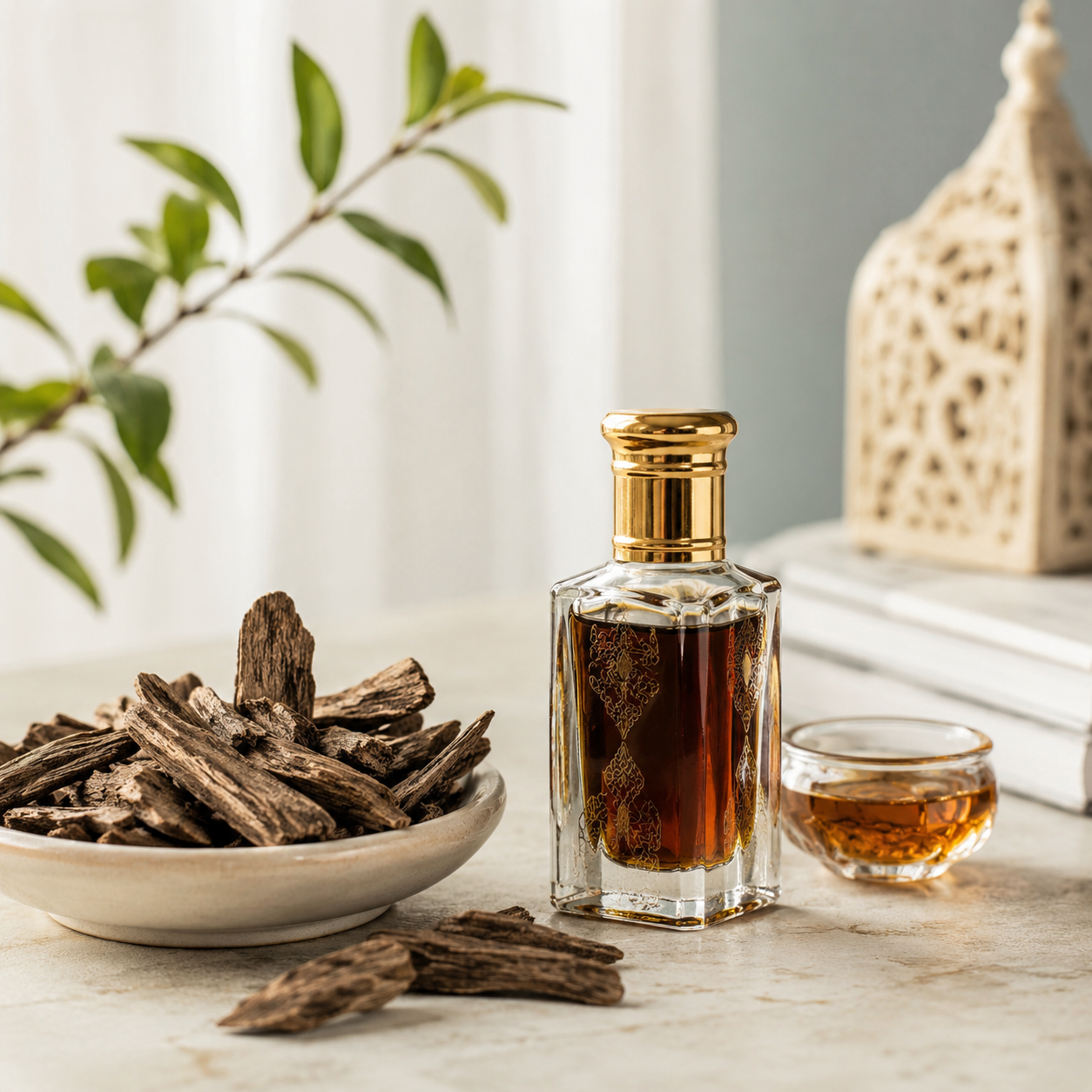
A Guide to Understanding Authentic Oud Quality
Introduction
Agarwood, also known as Oud, is one of the most valuable natural aromatic materials in the world. Due to its rarity and unique fragrance, authentic agarwood has been treasured for centuries across Asia and the Middle East.
However, as the popularity of oud continues to grow, the market has also seen imitation products made from ordinary wood, artificial fragrances, or chemically treated materials.
Understanding how to identify real agarwood can help you make better choices and appreciate the true value of this precious natural treasure.
At OUD SANCTUM, we believe that authenticity, quality, and responsible sourcing are the foundation of every exceptional oud experience.
1. Understanding What Real Agarwood Is
Authentic agarwood comes from the Aquilaria tree, which develops resin under certain natural conditions.
This resin formation creates the deep and complex aroma that makes oud so valuable.
Real agarwood is characterized by:
- Natural resin formation
- Unique fragrance layers
- Rich aromatic compounds
- Long-lasting scent development
Unlike ordinary wood, genuine oud contains natural resin that gives it its distinctive aroma and value.
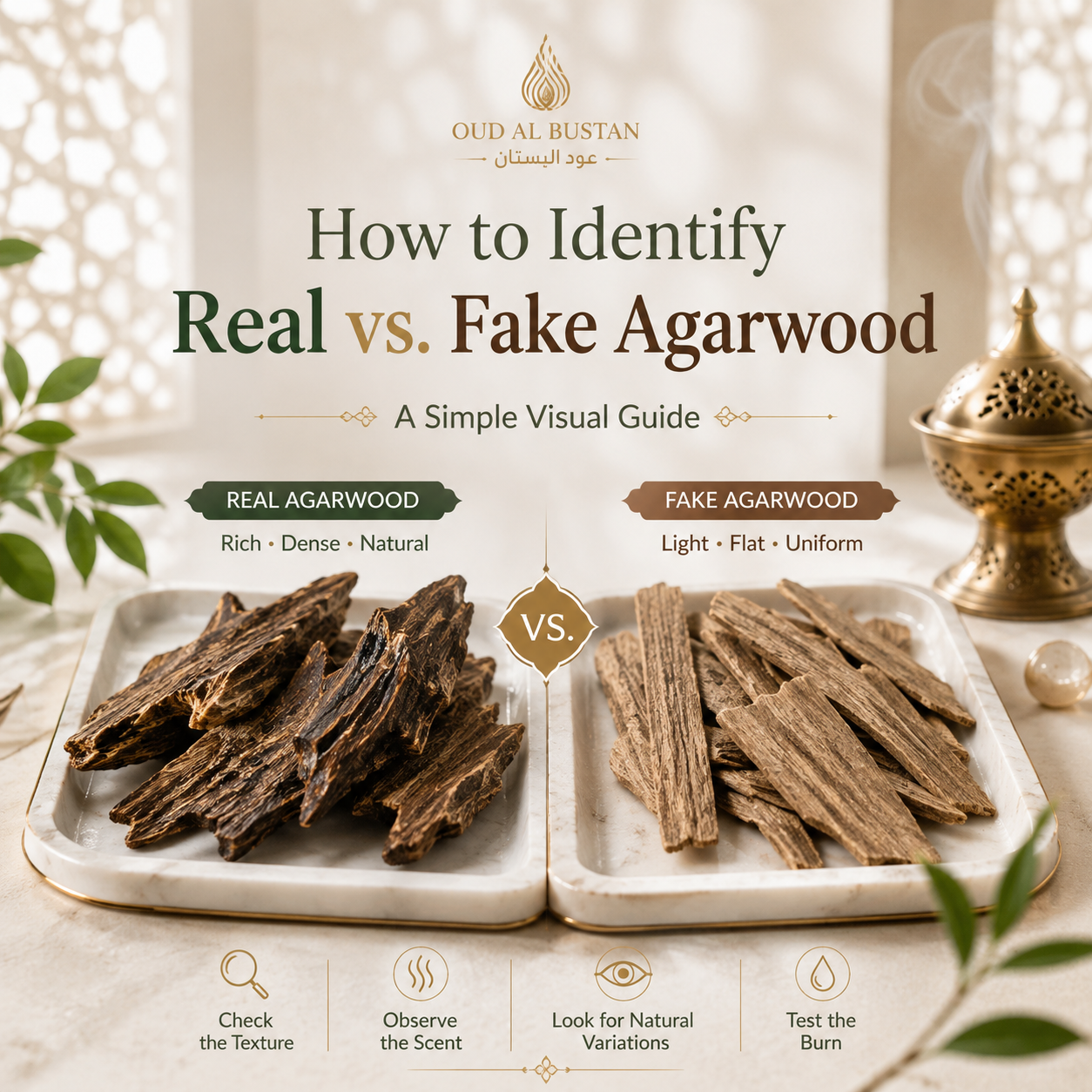
2. Examine the Appearance and Texture
The appearance of agarwood can provide important clues about its authenticity.
Real Agarwood:
✔ Contains visible resin patterns
✔ Has irregular natural textures
✔ Shows variations in color and density
✔ Feels dense compared to ordinary wood
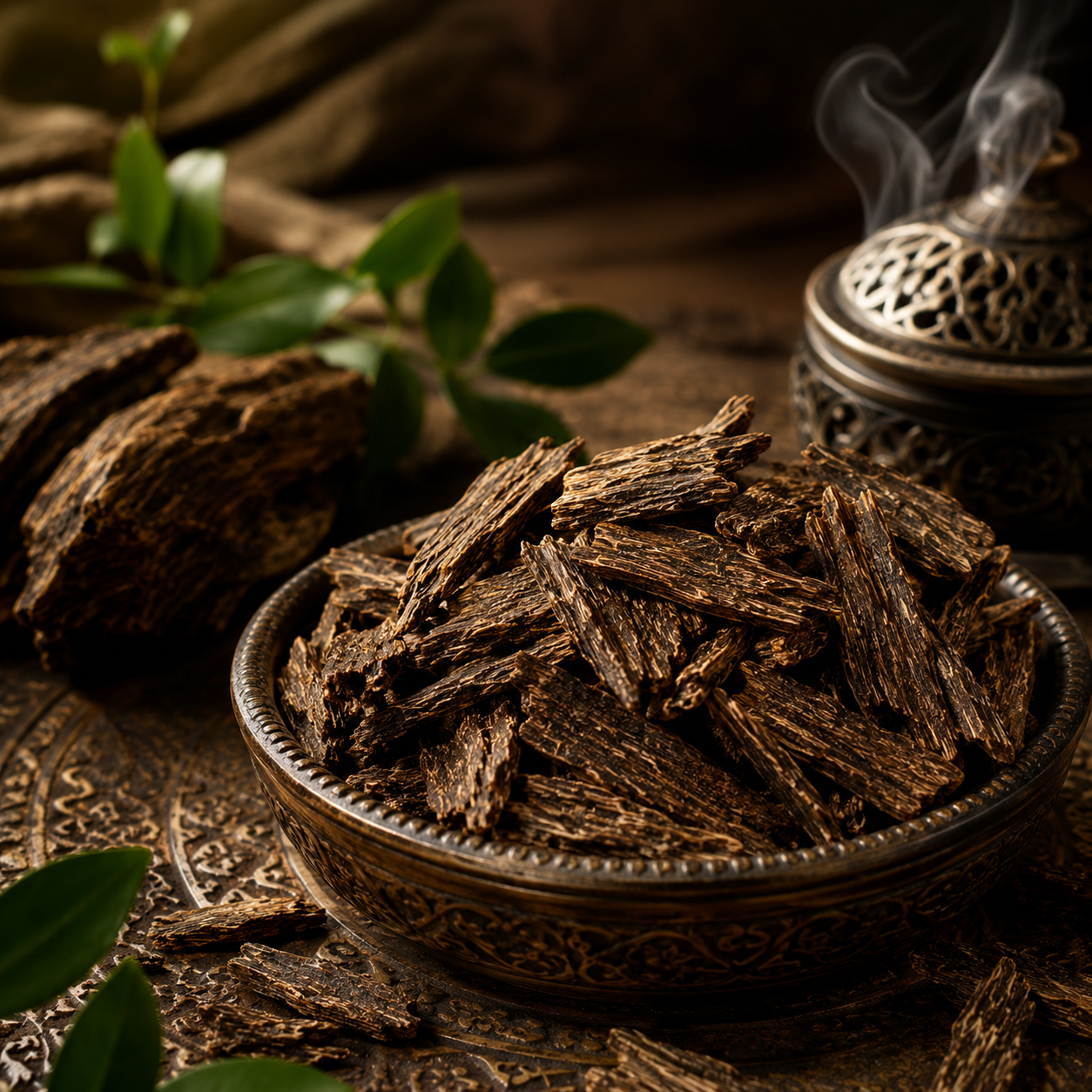
High-quality agarwood usually contains darker resin-rich areas mixed with lighter wood fibers.
Fake Agarwood:
✘ Looks too uniform or artificial
✘ Has painted or unnatural dark colors
✘ May appear overly smooth
✘ Lacks natural resin patterns
Because agarwood is a natural material, no two pieces are exactly the same.
3. The Fragrance Test
The aroma is one of the most important ways to recognize authentic oud.
Genuine Agarwood:
When heated, real oud gradually releases multiple fragrance layers:
- Woody notes
- Sweet and warm tones
- Earthy aromas
- Smoky or spicy characteristics
The scent often changes over time, revealing different layers as the resin is released.
Artificial Products:
Fake agarwood may:
- Smell strongly at first but disappear quickly
- Have a chemical or perfume-like aroma
- Lack depth and complexity
Natural oud is usually subtle, sophisticated, and continuously evolving.
4. The Burning Test
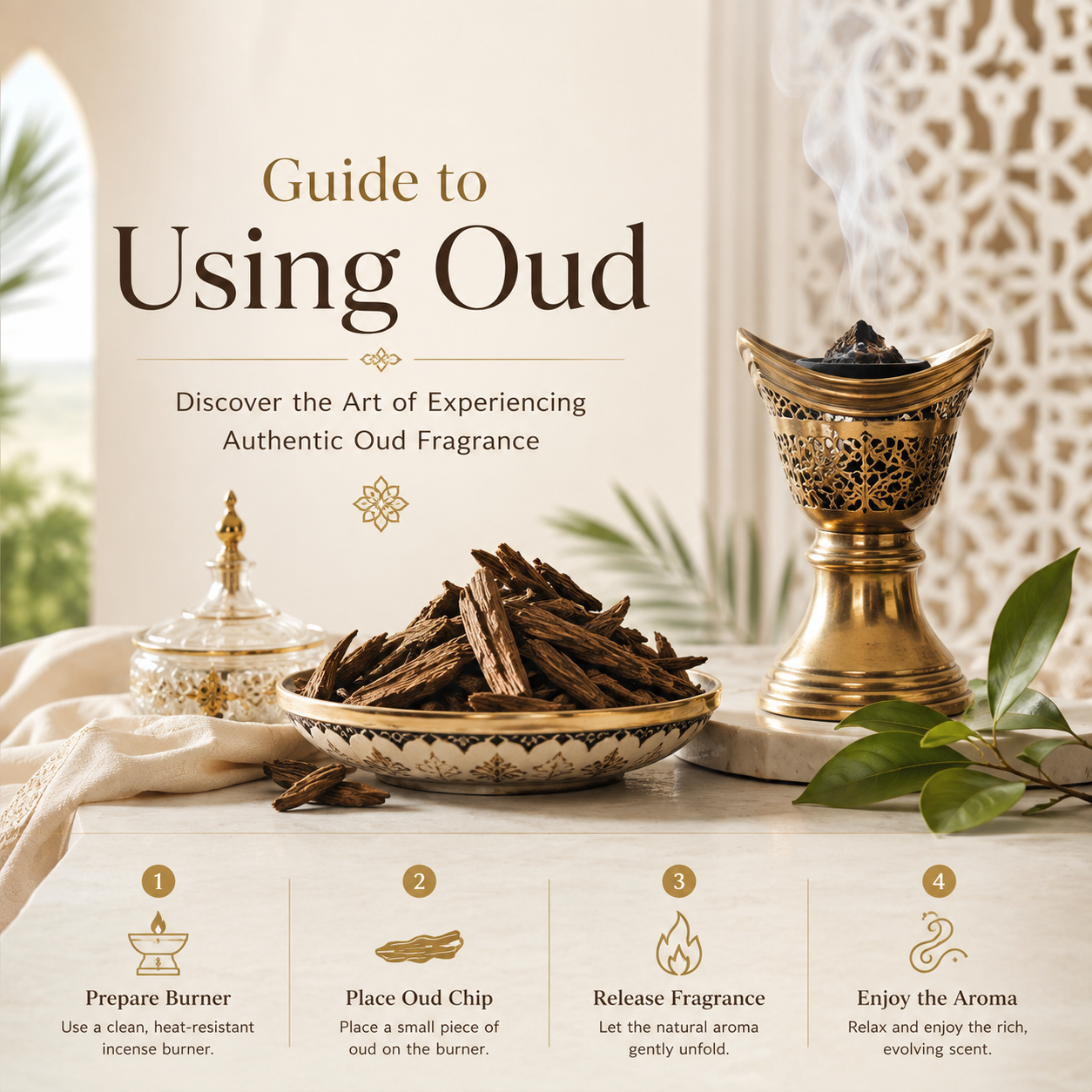
Traditionally, oud chips are tested by gently heating them.
Real agarwood:
- Produces fragrant smoke
- Releases a complex aroma
- Burns slowly because of its resin content
- Creates a natural and calming scent experience
Fake products often:
- Burn too quickly
- Produce a harsh smell
- Create excessive smoke
- Lack natural fragrance development
Note: Burning tests should always be performed carefully and with appropriate equipment.
5. Weight and Resin Content
One important characteristic of quality agarwood is resin concentration.
Higher resin content usually means:
- Stronger fragrance
- Greater density
- Higher value
Some premium agarwood pieces may even sink in water because of their high resin content.
However, water testing alone should not be considered a complete authenticity test, as many factors influence agarwood density.
6. Understanding Oud Oil Authenticity
Pure oud oil is highly valuable because it requires a large amount of agarwood material and careful extraction.
Authentic oud oil usually has:
- A deep and complex aroma
- Natural fragrance development over time
- Long-lasting performance on skin
Synthetic oils often have:
- A strong initial smell
- A simple fragrance profile
- A sharp or artificial character
When purchasing oud oil, always consider the source, production method, and transparency of the supplier.
7. Choose a Trusted Oud Source
The best way to ensure authenticity is to purchase from a trusted and experienced source.
A reliable oud supplier should provide:
- Clear product information
- Transparent sourcing practices
- Knowledge of agarwood origins
- Consistent quality standards
At OUD SANCTUM, we carefully select oud products with respect for traditional craftsmanship and natural authenticity.
Our goal is to connect customers worldwide with genuine agarwood and preserve the timeless beauty of oud culture.
Conclusion
Identifying real versus fake agarwood requires understanding its natural characteristics, fragrance, texture, and origin.
Authentic oud is not simply a product — it is a rare connection between nature, craftsmanship, and history.
By learning how to recognize quality agarwood, you can better appreciate the unique beauty and value of this extraordinary natural treasure.
Discover the world of authentic oud with:
OUD SANCTUM
Sacred Oud Source
Pure. Sacred. Timeless.
 038 月
038 月